
19 – 27 november 2025
With Cornelia Eichhorn & Fanny Lavergne
- The partner
Avignon University is a multidisciplinary public university located in the heart of the city of Avignon. Founded in 1303 and re-established in 1984, it now welcomes around 7,500 students and offers degree programmes from bachelor’s to doctoral level in literature, languages, humanities and social sciences, law, economics, management, science, and technology.
The university is organised around two campuses: Hannah Arendt, in the city centre, devoted to humanities, law, culture, and creativity, and Jean-Henri Fabre, dedicated to science and innovation.
Deeply rooted in its region, Avignon University conducts research focused on contemporary challenges and on the relationships between science, culture, and society. This commitment is notably embodied in the Villa Créative, a hybrid space bringing together the university, cultural institutions, public authorities, and businesses to foster innovation, cultural and creative industries, entrepreneurship, and new forms of knowledge sharing.
- The artistic approach of the residency
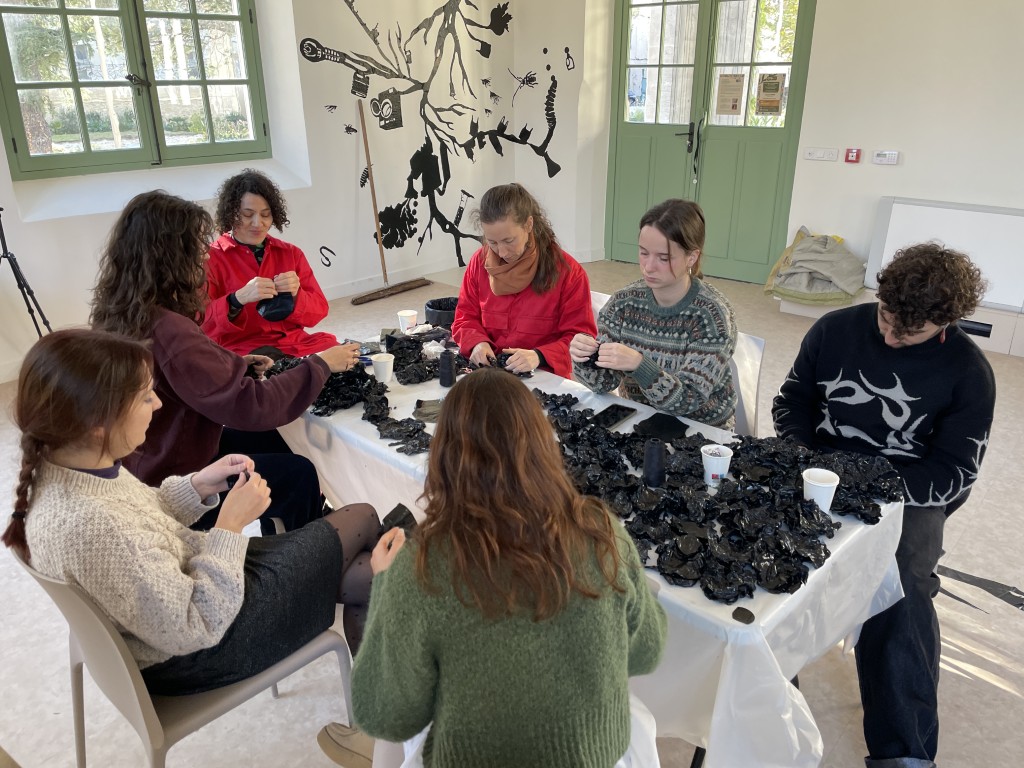
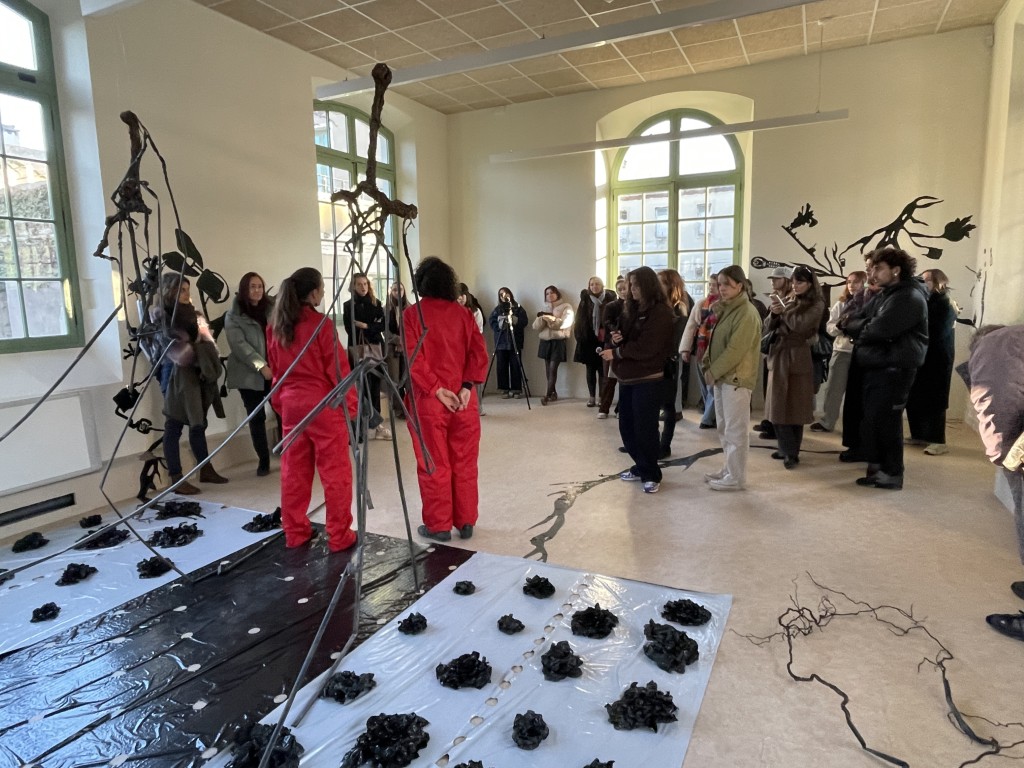
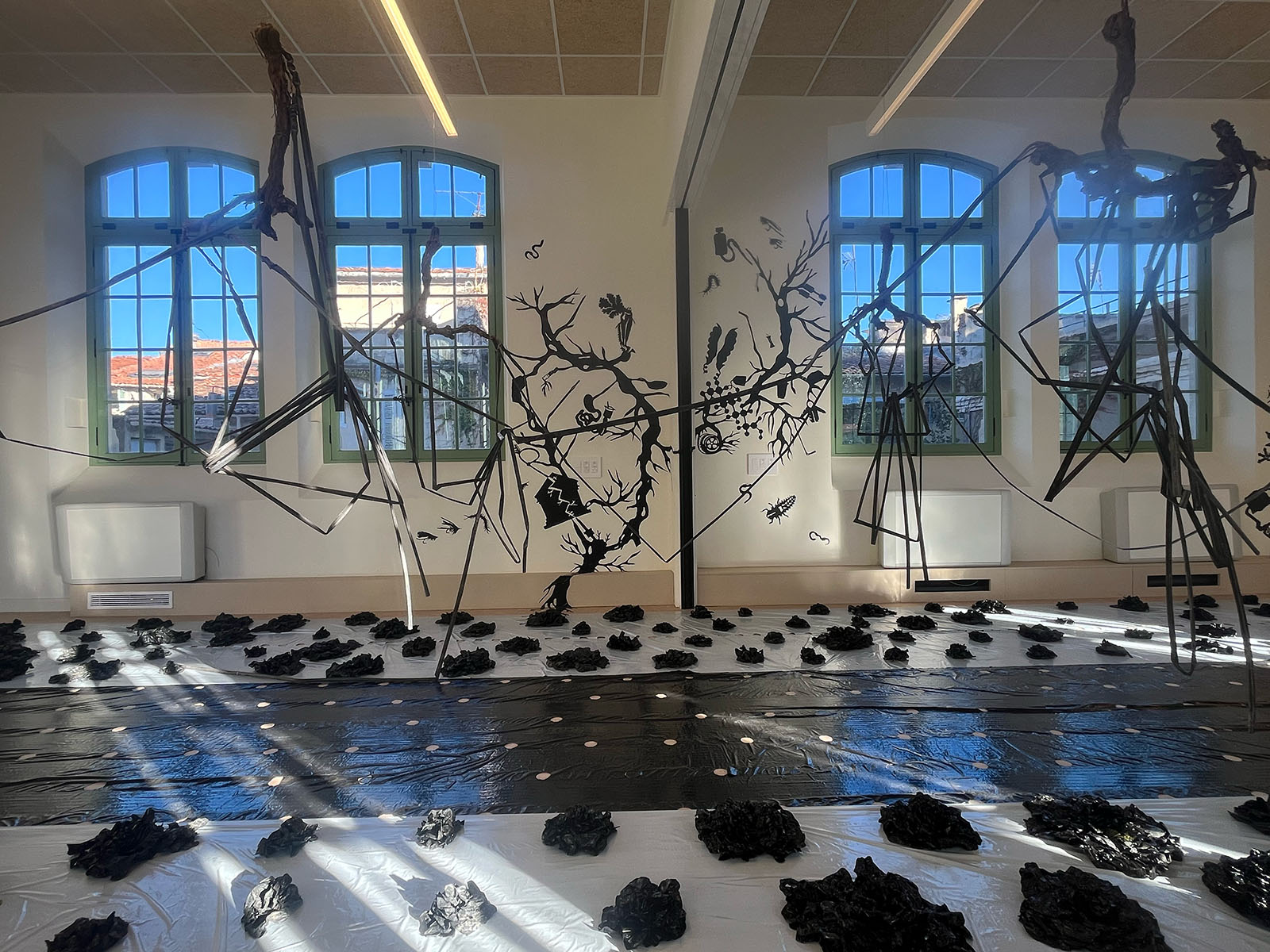
Invited to work on the issue of agricultural waste, which is particularly acute in the Avignon region, artists Cornelia Eichhorn and Fanny Lavergne chose to focus on something we almost never see: invisible waste, namely microplastics.
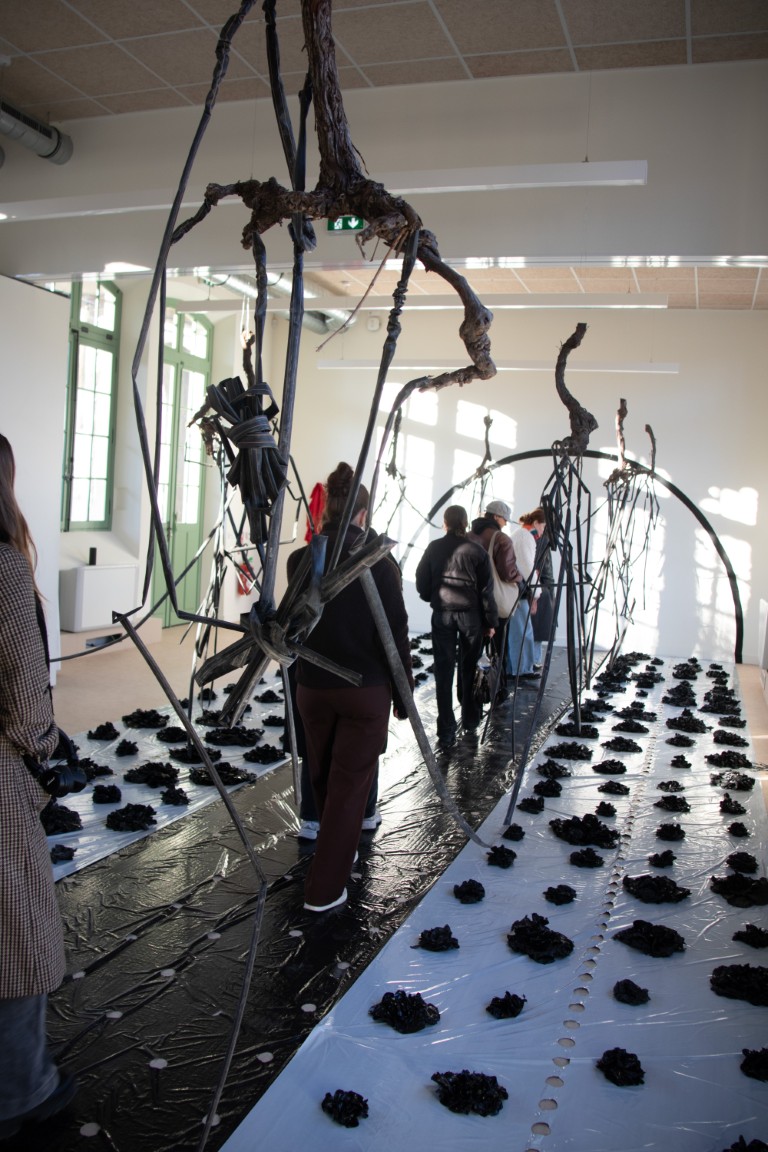
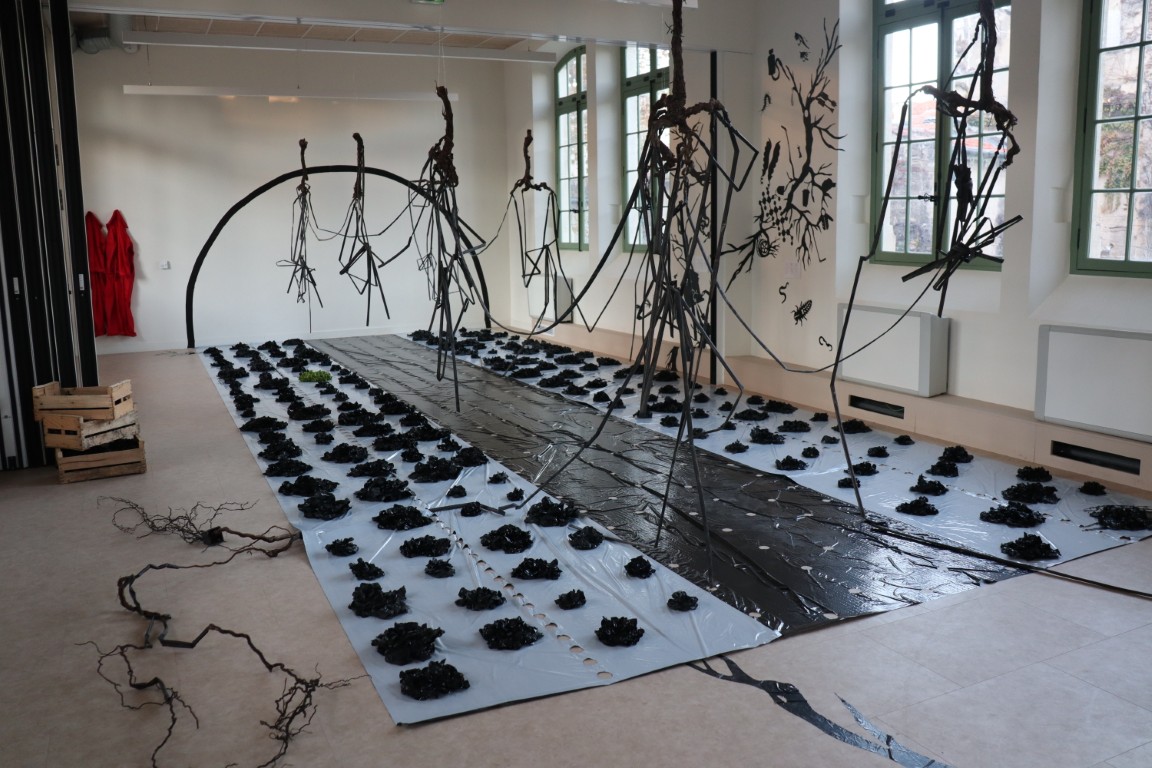
At the heart of the installation is a green salad, similar to others yet different. It shares certain attributes with its neighbors made from agricultural tarpaulins, as if to remind us of a disturbing reality: by drawing their nutrients from the soil, plants also absorb the microplastics that accumulate there. The intruder is therefore not only this strange plant, but also this silent presence that invades our fields.
The installation makes the invisible visible. The walls of the exhibition space are transformed into cultivated soil, covered with dark shadows from recycled agricultural tarpaulins. The landscape is turned upside down: what was supposed to protect the crop becomes a trace, a residue, a diffuse threat.
Through this work, the artists warn of the ticking time bomb that microplastics represent. While farmers are striving to cultivate more sustainably and recycling channels are being established, the question remains of plastics that have reached the end of their life cycle—and especially invisible plastics. Often originating from external sources, abandoned packaging, or contaminated compost, they remind us that responsibility is collective. The uprooted vines, rendered unproductive by a climate that has become too hot, are another symbol of this idea.
This creative laboratory, with its deliberately futuristic aesthetic, populated by hybrid forms combining wood and plastic, sketches out a worrying future—a future that we still have the power to change.
Artists
Cornelia Eichhorn and Fanny Lavergne
2025
Installation
New and used plastic mulch sheets, irrigation pipes, vine stocks, lettuce, wire, red work overalls
- The events during the residency
The study day
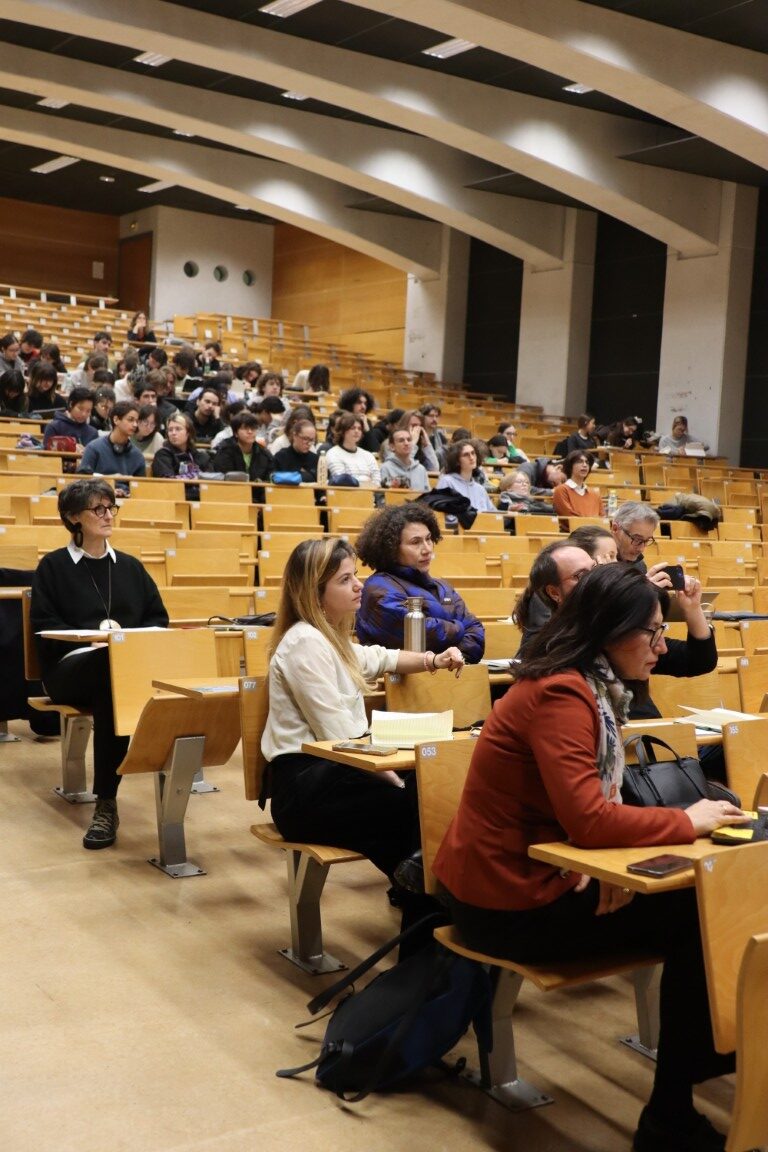
Held at the start of the residency, the study day invited participants to take a fresh look at everyday waste. It explored art’s ability to make the invisible visible, challenge assumptions and raise awareness and transform practices. Researchers, elected officials, artists and cultural actors met and exchanged ideas in front of an audience of students and professionals, collectively rethinking waste not as mere rubbish, but as a major cultural, social and political issue.
The end-of-residency event
Organised at the Villa Créative in collaboration with students from the Master’s programme in Culture & Communication at Avignon University, the residency’s closing event brought together a large audience in a spirit of openness and sharing. After presenting the project, the artists explained their approach, then invited the audience to wander through the installation. The exchanges continued informally, encouraging direct dialogue between artists, students, researchers and visitors, and making this a highlight of the event in terms of interaction and conviviality around the work.